The first year at a glance
| When | What to do |
|---|---|
| First day or two | Keep people, pets and bikes off it |
| After about a week | Cars are fine |
| After about a month | Heavier vehicles are fine, and sealer can go on |
| First winter | No de-icing salt. Use plain sand for grip |
| First spring | Wash off the winter grit and salt |
The first couple of days
Keep people, pets and bikes off it for the first day or two while it sets. Marks in fresh concrete are permanent.
Driving on it
Give it about a week before you drive a car on it. Heavier vehicles, like moving trucks or trailers, should wait closer to a month, while the concrete reaches full strength.
How long does concrete take to cure?
Concrete sets in a day or so, but it keeps getting stronger for weeks. It reaches most of its strength in about 28 days, which is why heavy vehicles should wait.
Small cracks are normal
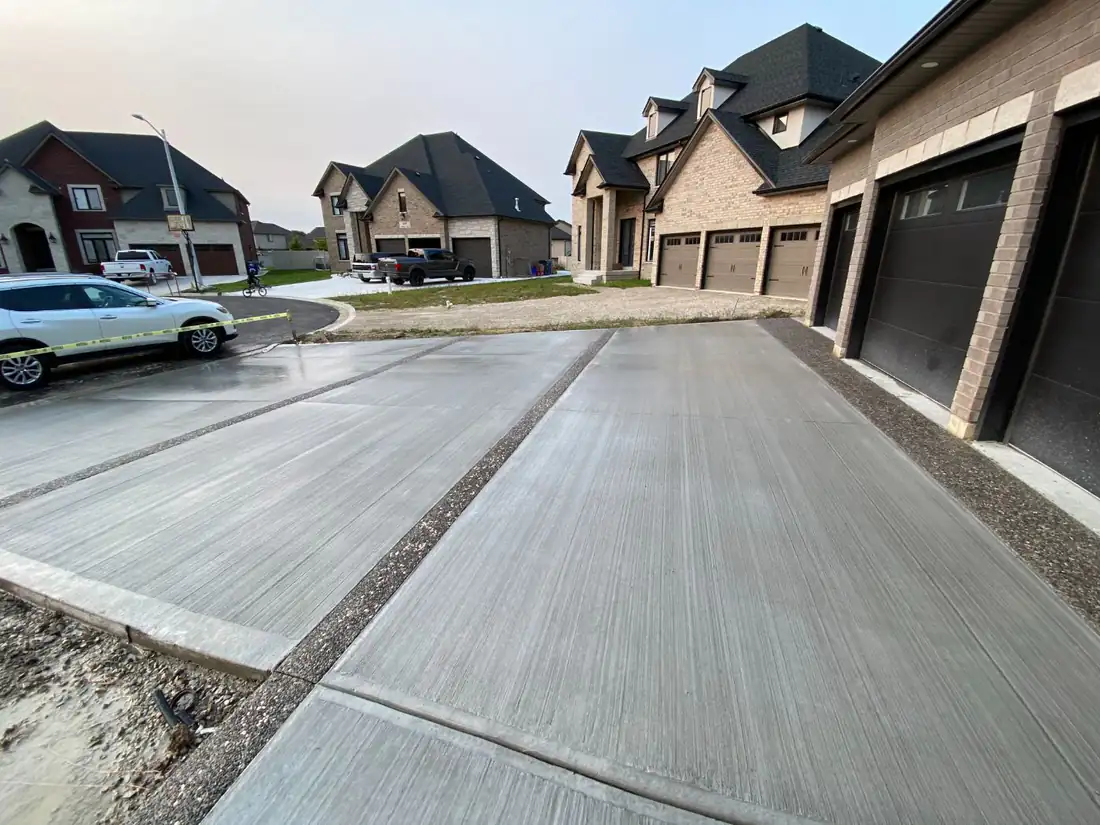
Concrete shrinks a little as it cures. That's what control joints are for: they give cracks a straight, planned place to happen. A hairline crack along a joint is the driveway doing what it was designed to do.
When a crack is worth a call
Hairline cracks are normal. If a crack is wide, getting bigger, or one side sits higher than the other, call us and we'll take a look.
Why new concrete can look patchy
New concrete often looks uneven in colour while it cures. That usually evens out over the first few months.
The first winter
Skip de-icing salt on a new driveway through its first winter, and never use de-icers with ammonium nitrate or ammonium sulfate. Plain sand gives you traction without damaging the surface.
Road salt from your car
Even if you never salt the driveway, cars drag road salt home all winter. Rinse the driveway on mild days, so salty slush doesn't sit on it through freeze and thaw.
What scaling is
Scaling is when the top layer of concrete flakes off in patches. It usually comes from salt and freeze-thaw cycles working on the surface, which is why the first winter matters so much. Windsor winters swing above and below freezing a lot.
Clearing snow
Plastic shovels and rubber-edged blades are fine. Metal blades can gouge the surface.
Should you seal a new driveway?
Sealer can help keep out water and salt, but it shouldn't go on until the concrete has had time to cure, usually about a month. Follow the directions on the product, or ask us at the estimate.
Heavy loads and edges
Keep heavy trailers and bins off the edges of the slab, where the concrete has the least support. If you're having work done, ask the crew to lay boards down.
Keeping it clean
Rinse off oil spills and wet leaves before they stain, and give it a wash with a hose and a stiff broom a couple of times a year.
Thinking about a new driveway?
Free on-site estimate anywhere in Windsor-Essex, with a written quote the same day. One-year warranty, fully insured and WSIB covered. Call or text 519-567-4724.